Technical buyer guide · 2026-11-17
160/60-18 motorcycle tire
160/60-18 motorcycle tire guide for purchasers: technical checks, MOQ, Dongying production support and Qingdao export logistics from a China tyre supplier.
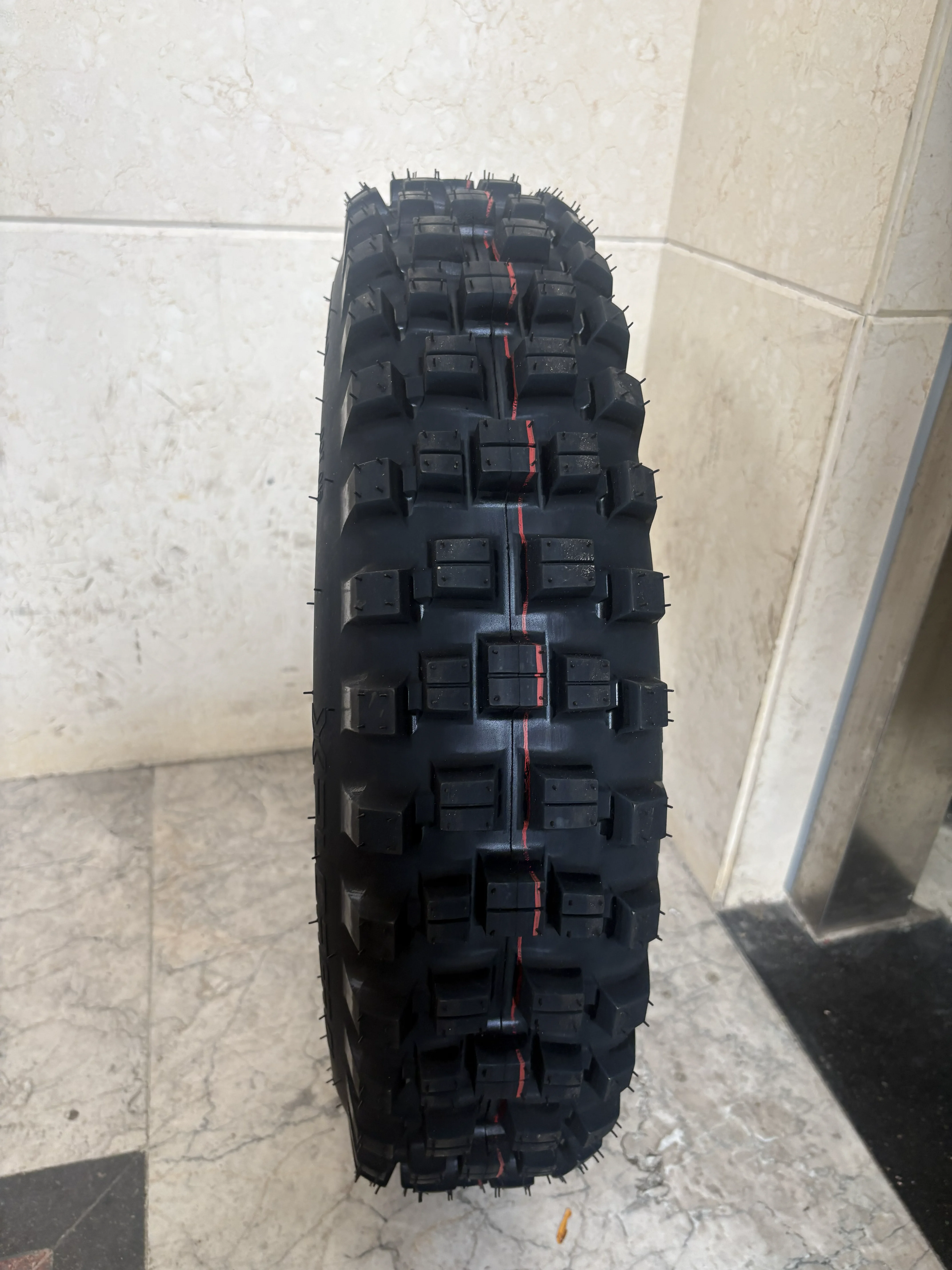
This technical buyer guide is written for importers, distributors, private‑label buyers and fleet purchasers evaluating a China tyre manufacturer/supplier for 160/60-18 motorcycle and dirt‑bike tyres. It answers the key technical and procurement questions you should resolve before placing an order and identifies every model‑specific item that must be verified with the supplier.
What "160/60-18" means — and what you must verify
The size notation 160/60-18 identifies a tyre size class commonly specified for motorcycles and some dirt bikes. As a buyer you should verify, in writing, the following model‑specific items for each SKU: rim fitment (exact nominal rim width and type), static and rolling section width, load index, speed rating, construction (bias or radial), ply/ply‑rating, and whether the tyre is tubed or tubeless. Each of these is a buyer verification item and cannot be assumed from the size alone.
Also confirm marking and labelling requirements you need (country‑of‑origin, size markings, DOT/E‑mark if required by your market), because legal and aftermarket fitment depends on those details.
Construction, tread choice and application guidance
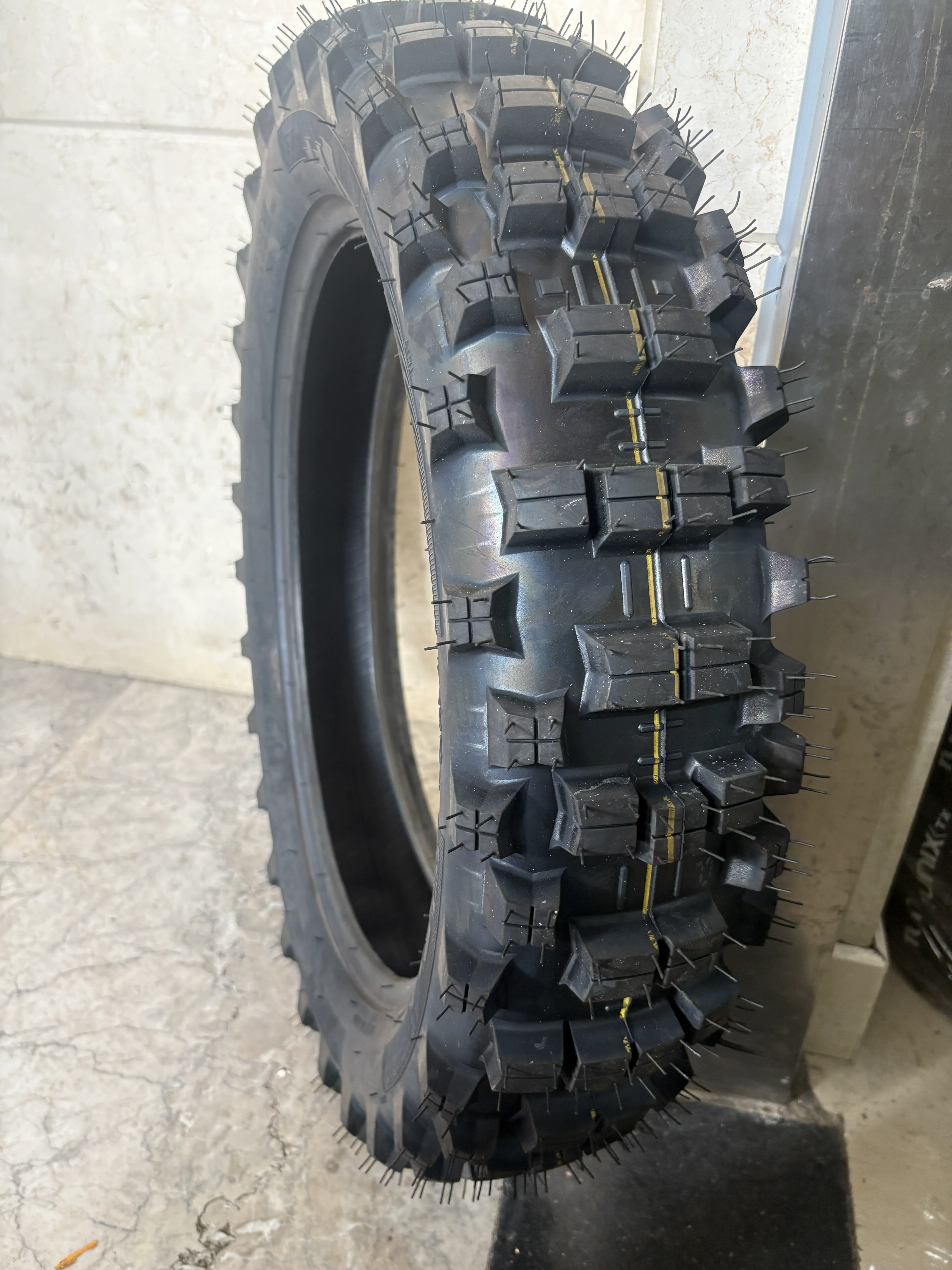
Selecting the right 160/60-18 tyre requires matching construction and tread to intended use. Typical considerations include: tread pattern (road, mixed/dual‑sport or off‑road knobbies), rubber compound (road‑oriented vs softer off‑road compounds), carcass design (single ply, multi‑ply) and bead design for rim seating. For each SKU, the exact tread compound, construction details and recommended application must be confirmed as buyer verification items.
If you are sourcing tyres for dirt‑bike or dual‑purpose motorcycles, specify expected operating conditions (hardpack, soft/muddy, sand, wet roads) and confirm the supplier’s recommended pattern and compound for those conditions. Do not accept generalized pattern names without written confirmation of compound formulation, intended use and nominal service life — those are model‑specific verification items.
Quality control, inspection scope and packaging
Agree the inspection scope before production. Required checks typically include dimensional checks (section width, overall diameter), visual inspection for uniformity and defects, bead integrity, and curing/compound verification. Define acceptance criteria and sampling plans in your purchase order or quality agreement. Inspection scope and pass/fail criteria are buyer verification items.
Packaging and crate/stacking methods affect freight loading and damage risk. Global Excel Tyres coordinates China production support in Dongying and export/container coordination through Qingdao; however, exact packing format, carton markings, and export documentation must be specified and confirmed in the written quotation.
Procurement logistics and lead times
Baseline commercial terms to use in supplier evaluation:
- Standard MOQ: 100 tyres per model (buyer verification: final MOQ must be reconfirmed in the written quotation).
- OEM/private‑label programmes: start from 300 tyres per model (buyer verification: confirm exact private‑label workflow and minimums in writing).
- Typical production lead time: about 30 days after specification and order confirmation (buyer verification: reconfirm final lead time in the quotation and purchase order).
Mixed‑pattern and mixed‑size container planning is supported, but exact loading quantities depend on tyre size, pattern, construction, packing and destination requirements — this is a buyer verification item for each planned shipment. Export and container coordination is handled through Qingdao, while production support is coordinated in Dongying; do not assume every SKU is made at a single site — production origin is a buyer verification item.
Supplier evaluation checklist (practical table)
| Specification to confirm | Why it matters | Buyer action (must confirm in writing) |
|---|---|---|
| Exact size, rim fitment and section width | Ensures correct fitment and safety on target rims | Request dimensional drawings and fitment statement (buyer verification item) |
| Load index and speed rating | Legal and operational safety for intended use | Require supplier declaration of load/speed ratings per SKU (buyer verification item) |
| Construction (bias/radial), ply rating | Affects handling, durability, and load capacity | Obtain technical spec sheet and confirm carcass details (buyer verification item) |
| Tread compound and pattern | Determines performance for intended terrain | Ask for compound formulation summary and recommended application (buyer verification item) |
| Inspection scope and sampling plan | Controls quality and reduces claim risk | Agree acceptance criteria and provide inspection checklist (buyer verification item) |
| Packaging, palletisation and export docs | Affects freight quoting and customs clearance | Confirm packing type, pallet counts and required export documents (buyer verification item) |
Common procurement pitfalls to avoid
- Assuming load index, speed rating or compound without a written specification. These are model‑specific and must be confirmed.
- Using blanket MOQs or lead times from past orders. Global Excel Tyres publishes a commercial baseline (100 tyres per model standard MOQ; 300 for OEM programmes; ~30 days typical lead time) but final MOQ and timing must be reconfirmed in the written quotation.
- Expecting fixed container counts. Mixed‑size/pattern loads are possible, but exact load depends on each SKU’s dimensions and packing.
- Skipping production‑origin verification. Production support is coordinated in Dongying and exports via Qingdao; confirm the actual production site(s) for each SKU.
Next step: what to include in your RFQ
To obtain a reliable written quotation and to progress a private‑label or distribution programme, include the following in your RFQ:
- Exact SKU designation (160/60-18) and the required rim fitment/nominal rim width.
- Required load index and speed rating for your market (buyer verification item).
- Preferred or acceptable tread pattern(s) and intended application (road/dirt/dual‑sport).
- Construction preference (bias or radial), ply rating if required, and whether tubed or tubeless is needed.
- Packaging, labelling and export documentation requirements.
- Quantity required: indicate if standard MOQ (100) or OEM/private‑label (from 300) is expected and whether mixed‑size container planning is needed.
- Requested inspection scope and any pre‑shipment inspection requirements.
Global Excel Tyres coordinates China production support in Dongying with export/container coordination through Qingdao. Use the RFQ to request a written quotation that reconfirms final MOQ, exact lead time and the production origin for each SKU — these are all buyer verification items and must be stated in the supplier’s written reply.
If you need a checklist template or an RFQ worksheet tailored to 160/60-18 motorcycle tyres for private‑label programmes, request it alongside your initial enquiry. The supplier should return a written quotation that lists all confirmed model‑specific values and inspection/packing details before you place the order.